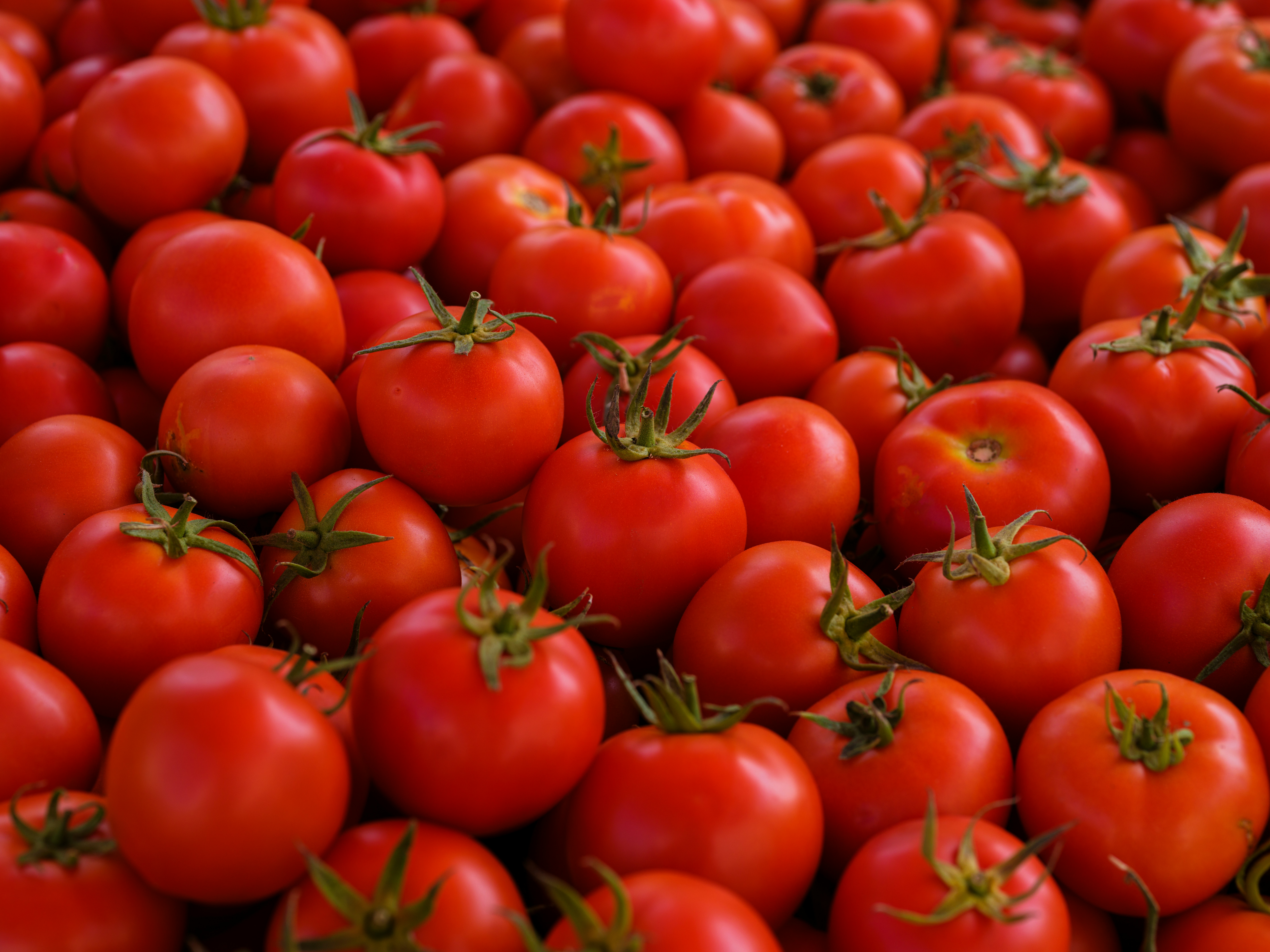
At peak right now: Tomatoes, Sweet Corn, Peaches, Watermelon, Blue Crab. Head to a farmers market or your CSA to find them fresh.
August tomatoes from a good Maryland farm are not a seasonal luxury so much as a correction. For eleven months you have been eating something that looks like a tomato and behaves like one in a recipe, but the grocery store tomato is an engineering project. It was bred to have thick skin that won't split in a truck, a firm interior that holds up through cold storage and distribution, and a uniform red color that signals ripeness without requiring it. Flavor was not the brief. A Brandywine or a Cherokee Purple picked that morning at a farm in Frederick or Calvert County has thin skin, high water content, and a color that may be purple-green or streaked or just wrong-looking by grocery standards. It will not last five days on your counter. It is also a completely different object from what you have been buying all year.
At peak season, usually the second and third weeks of August, a market table might have eight or ten varieties side by side. Sun Gold cherry tomatoes from a vine that got afternoon shade taste sweeter than ones from full sun. German Johnson runs big and pink and meaty with low acid. Green Zebra has a tart bite and holds its shape when you slice it. Cherokee Purple goes almost black-red at the shoulders and tastes like something that has been sitting in warm soil for a long time, which it has. The way to shop this is to ask the farmer what was good this week and buy more than you think you need, because the window is short and you will eat them faster than you expect.
A ripe summer tomato over the sink with coarse salt is not a recipe, but it is a useful place to start understanding what you are working with. The juice runs down your arm. The flesh has almost no resistance. For an actual meal, a tomato salad in August needs very little intervention: thick slices, a good olive oil, salt, maybe torn basil from the same market, maybe a few slices of red onion that have been soaking in cold water for twenty minutes to take the edge off. Bread to drag through the liquid at the bottom of the bowl. If you find yourself with more tomatoes than you can eat fresh, roasting is the best use of the overflow. Halve them, cut side up on a sheet pan, olive oil, salt, into a 325-degree oven for two hours. They collapse and concentrate and come out somewhere between a sauce and a condiment. That goes on pasta, into eggs, on toast, into the freezer in a jar if you want October to feel less bleak.
The farms selling at Gorman, the Bel Air Farmers Market, CrossStreet, FRESHFARM in Bethesda, and at roadside stands all over the Eastern Shore will have their best supply from now through the first week of September. After that the nights cool down and the fruit slows, and you will be back to what the grocery store offers.
A few producers worth knowing about this week.
Common Root Farm, a certified organic vegetable operation tucked near Olney in Montgomery County, brings regenerative growing practices to your table through a CSA, farmers market stands, and a convenient online grocery store. Their approach centers on minimal-till cultivation, crop rotation, and natural pest management , all without synthetic chemicals. They also supply local restaurants, grocers, and food banks, making them one of the more deeply rooted small farms in the county.
Slide 1 Linking Maryland Farmers & Watermen with Consumers Maryland’s Best started in 2002 and is operated by the marketing department at the Maryland Department of Agriculture. Maryland’s Best started in 2002 and is operated by the marketing department at the Maryland Department of Agriculture. We
The Nourish Acres in Gaithersburg operates as a farm-to-door grocery service with a strong focus on nutrition, bringing together pasture-raised meats, farm-fresh vegetables, farmhouse dairy, and French artisan breads and pastries. Rather than a single-source farm box, their model curates products from trusted producers alongside what they grow themselves, making it a one-stop option for Montgomery County households prioritizing clean, chemical-free food. Delivery is available directly to your door.
Real Food Farm Clifton has been growing food on eight acres in and around Baltimore's Clifton Park for years, operating as part of Civic Works' broader mission to connect city residents with fresh produce. Their CSA program sources from local farm partners in addition to their own urban plots, making it a solid option for Baltimore households looking for flexible community access to regional food. A meaningful milestone is on the horizon: Civic Works is purchasing its first permanent farm site, with Civic Works Farm set to launch in 2027.
Farmer's Supermarket on Landover Road in Hyattsville has built a loyal following by doing something most grocery chains stopped offering long ago: cutting meat to your exact specifications at no extra charge. The counter handles beef, pork, chicken, turkey, lamb, goat, and fish, with wholesale and retail pricing available and additional discounts for business customers. They accept EBT and are open every day of the year, no exceptions.
O'Donnell's Market in Potomac has been a Montgomery County institution for over a century, built around the Norfolk style of cooking and a roster of original recipes that have stayed in the family across generations. Beyond fresh seafood, the market covers serious ground with a raw bar, butcher counter, and bakery all under one roof, plus catering for everything from weeknight dinners to holiday spreads. Find them on Seven Locks Road when you want something with real history behind it.
Know a farm, market, or maker we're missing?
Submit a Listing