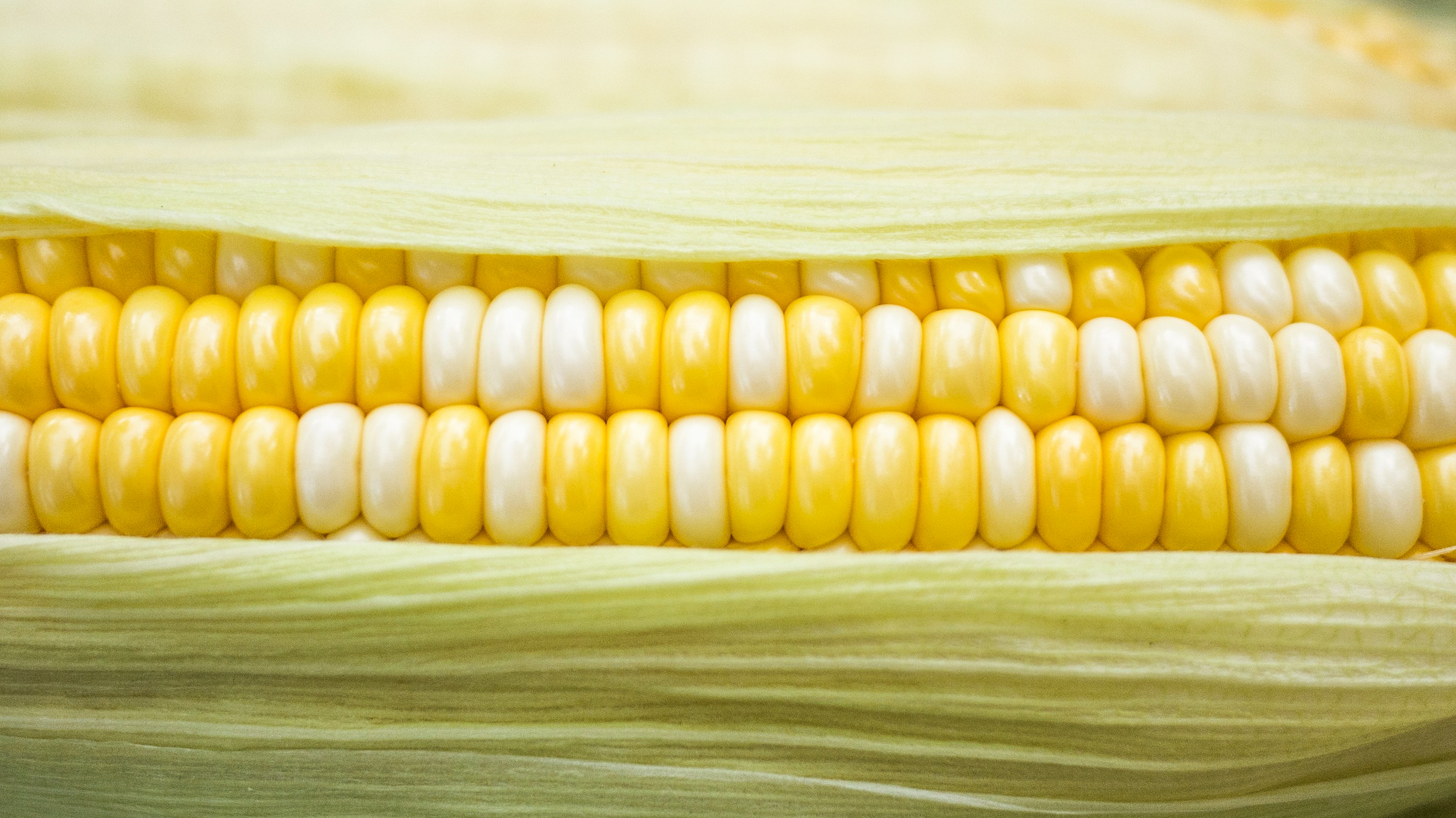
At peak right now: Tomatoes, Sweet Corn, Peaches, Watermelon, Blue Crab. Head to a farmers market or your CSA to find them fresh.
Sweet corn season in Maryland runs from mid-July through August, and for a lot of people it marks the real center of summer more than any calendar date does. The roadsides in Anne Arundel, Queen Anne's, and Cecil counties fill up with pickup trucks and plywood stands stacked with ears, sometimes with a handwritten price on cardboard, sometimes with a kid making change out of a cash box. The corn at those stands was probably pulled that morning. In some cases the field is visible from where you're parked.
Silver Queen built the reputation. It's a white variety that dominated Maryland roadside stands for decades, and older growers will still tell you there's nothing better, which is a position that has more sentiment in it than agronomy but isn't wrong either. Silver Queen has a longer growing window and a slightly milkier flavor than some of the newer bicolor and yellow supersweet hybrids. Farms across the Eastern Shore and in the piedmont counties have added varieties like Incredible and Luscious over the years, breeding lines that hold their sweetness longer after harvest. The reason those newer varieties were developed is the same reason the old advice about corn exists at all: the moment an ear is picked, its sugars start converting to starch. The sweetness is literally leaving the corn as time passes. The old instruction to get the water boiling before you go out to the field wasn't a folksy exaggeration. It was chemistry.
What that means in practice is that a cob bought from a stand in Sudlersville or Bel Air and cooked the same afternoon is a different thing than corn that spent two days in a refrigerated truck and then sat in a grocery store bin. The difference isn't subtle once you've had both close together. Fresh corn has a liquid sweetness that's almost grassy, and the kernels pop rather than compress when you bite them. Grocery store corn isn't bad exactly, it's just a flattened version of the same vegetable, like a photograph of a place you've been.
A roadside stand is also one of the more direct transactions available to someone who wants to know where their food comes from. At a farmers market you're usually buying from the grower directly, but at a roadside stand in Maryland you're often buying from someone who drove the corn up from the field themselves and will go back to check on the irrigation later that afternoon. That proximity doesn't change the flavor of the corn, but it means the money goes directly to the farm operation without much in between. If you ask which variety is sweetest right now, or whether they've got any bi-color coming in, the person at the stand usually knows because they were in the field. The season is short enough that it makes sense to pay attention while it's here.
A few producers worth knowing about this week.
Tucked along Dickerson Road in the shadow of Sugarloaf Mountain, Deere Valley Farm has been working the same Montgomery County land for five generations. Their year-round market stocks a broad range of farm-raised beef, pork, lamb, goat, and chicken alongside raw milk artisan cheeses, butter, yogurt, and local baked goods. Honey, teas, coffee, and house sauces round out the shelves for anyone looking to build a meal almost entirely from one stop.
Redman Farms is a four-family operation based in Kent County, growing and selling grain, cut flowers, produce, vegetable plants, hay, and straw out of Chestertown. You can find them at the Chestertown Farmers Market or stop by their roadside stand on Bakers Lane, where open flags signal that freshly picked produce is ready. They added cut flowers and wildflowers to their lineup in 2022, rounding out a stand that already covers a lot of ground.
Stoecker Farms has been working Howard and Baltimore County land for more than 125 years, which puts their roots in Maryland soil well before most of us were born. They run CSA shares in 5, 10, and 20-week increments, giving flexibility for households that want to dip in or commit fully to the season. You can also find them at the JFX, Govanstown, Druid Hill, and Hampden farmers markets throughout the week.
Visit website →Rocklands Farm Winery sits in the heart of Montgomery County's Agricultural Reserve, about 30 minutes from DC along Montevideo Road in Poolesville. The farm produces low-intervention wines available through their Cellar Club and tasting room, which opens Thursday through Saturday with live music on Friday evenings. Pasture-raised meats round out the farm's offerings, and the historic property hosts weddings, team retreats, and seasonal farm camps.
Tucked into the gentle hills of Brandywine in Prince George's County, P.A. Bowen Farmstead runs a grass-based, multi-species operation where cattle, poultry, and hogs work the land together in rotation. The farm produces raw milk artisan cheeses alongside soy-free eggs, beef, pork, veal, and pastured poultry , all raised without hormones, growth enhancers, or pesticides. It is one of the few Maryland farms doing serious raw-milk cheesemaking while also running a full pasture-to-table meat program.
Flying Plow Farm is a small-scale diversified farm. Key to our farming is the integration of vegetables, cattle, poultry, draft animals, pigs, and people to create a self-sustaining farm organism.
White Rose Farm sits on 132 acres near Taneytown in Carroll County, where biodynamic practices guide the production of vegetables, herbs, flowers, pasture-raised pork, and free-range eggs. The biodynamic approach goes beyond organic certification, treating the farm as a self-sustaining ecosystem, which tends to show up in the quality of what ends up on your plate. They also host seasonal events, making it a good excuse to see the land your food comes from.
Know a farm, market, or maker we're missing?
Submit a Listing