At peak right now: Strawberries, Peas, Lettuce. Head to a farmers market or your CSA to find them fresh.
Egg cartons at the grocery store have gotten crowded with language. Cage-free, free-range, pasture-raised, humanely raised, certified humane, American Humane Certified. The words stack up and most of them don't mean what you'd picture if you closed your eyes and imagined a chicken outside in a field. Knowing what a few of the key terms actually require helps cut through it.
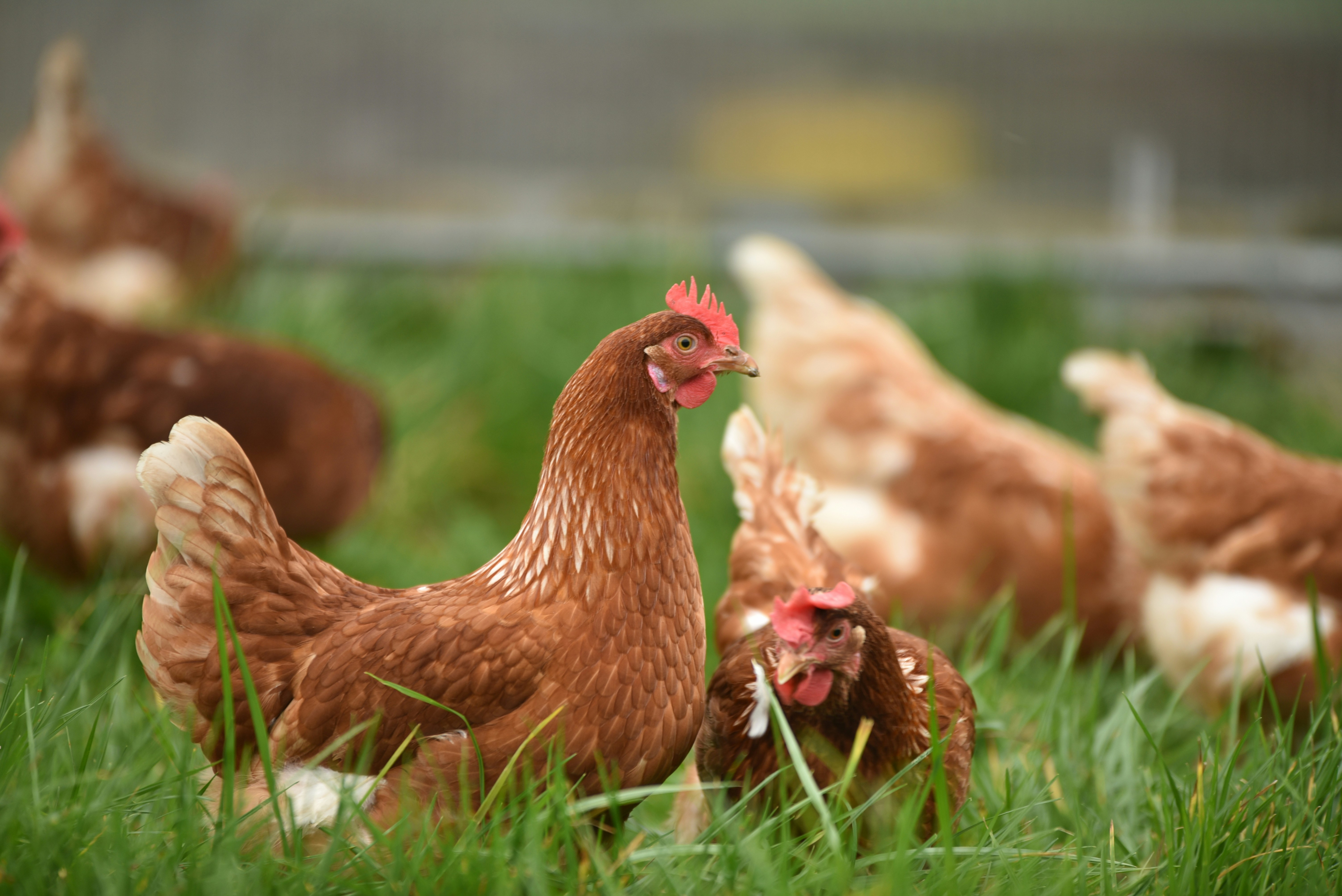
Cage-free means the birds are not in battery cages, which is a real improvement over conventional confinement, but it doesn't mean they go outside. A cage-free operation can be a large indoor barn with thousands of birds and no outdoor access at all. Free-range requires that outdoor access be available, but the USDA standard doesn't specify how much space, what the outdoor area looks like, or how long the door has to be open. In practice, a free-range flock might have a small concrete pad or a narrow strip of dirt accessible through a few small doors. The birds may rarely use it. Pasture-raised is the term that comes closest to the image most people have, with chickens or pigs or cattle spending most of their days on living grass, rotating through paddocks, doing what the animals do. But here is where it gets complicated: pasture-raised has no USDA regulatory definition for eggs or most meat. Any producer can print it on a carton or a label without meeting a specific federal standard.
Third-party certifications like Certified Humane or Animal Welfare Approved do have written pasture standards attached to them, so those labels carry more weight than the term alone. Certified Humane pasture-raised eggs, for instance, require 108 square feet of outdoor space per bird. That's a real number. But for most of the eggs and chicken and pork sold at a farmers market or through a farm CSA in Maryland, there's no certification at all, and the claim rests entirely on what the farmer is actually doing and whether you can find out.
That's where buying local has a practical advantage that goes beyond supporting the regional food economy. Farms that sell at markets like the Waverly Saturday Market in Baltimore or the Takoma Park Farmers Market, or that run CSA shares in Anne Arundel or Howard County, are generally reachable by phone or email, and many of them welcome visits. You can ask how many birds they run per acre, what rotation looks like, whether the pigs are on dirt or on pasture, and what the flock eats besides grass. Farmers who are doing it well tend to want to talk about it. If a farm is running 50 laying hens on a few acres and moving them with a portable shelter every few days, you'll know that from a single conversation. That kind of information doesn't fit on a carton label, but it tells you more than any certification would.
A few producers worth knowing about this week.
The UMD Farmers Market runs Wednesdays at Tawes Plaza on the College Park campus, drawing vendors from within 250 miles who grow or make everything they sell. The spring 2026 season runs April 1 through May 6, 11am to 3pm, with regulars that include McCleaf's Orchard, Cove Point Winery, Randalia Beehive, and Girardot's Crumbs Bakery. It's a tight, well-curated midweek market that rewards Terps and neighbors alike who can slip away for a lunch-hour browse.
Richfield Farm out of Manchester in Carroll County specializes in the kind of produce that makes farmers market shopping worthwhile , ethnic varieties and heirloom vegetables that go well beyond standard supermarket offerings. You'll find their stand at JFX Baltimore, Towson Thursday, and two DC markets on H Street and Mt. Pleasant. If you're looking for something specific and a little harder to source, this is a good place to start.
Owl's Nest Farm in Upper Marlboro holds Certified Naturally Grown status and has been growing vegetables and herbs for CSA members and farmers market shoppers in the DC and Maryland region for years. Their 2026 CSA season is open for signups now, with pickup sites spread across DC and MD neighborhoods, and members can add on products from other local producers. It is a small-scale operation with a clear commitment to keeping the relationship between grower and eater close.
Little Portion Farm in Ellicott City is a Franciscan ministry with a mission that goes well beyond the growing season. Operating on permaculture and regenerative principles since 2019, the farm has donated over 100,000 pounds of produce to people in need across the region. Volunteers are welcome, making it one of the few farms in Howard County where showing up with a few free hours can translate directly into food on someone's table.
Punjab SuperMarket & Halal Meat on Dobbin Road in Columbia is a well-stocked Pakistani, Middle Eastern, and Indian grocery carrying fresh halal meats cut to order, alongside a broad selection of spices, rice, flour, and frozen goods. For Howard County cooks who want halal options with the flexibility of custom cuts, this market is an easy weekly stop. It's open seven days a week.
Faidley's Seafood has been a fixture at Baltimore's Lexington Market since 1886, making it one of the oldest seafood purveyors in the Chesapeake region. Still owned by the Devine family, descendants of the original founders, the stall is best known for its jumbo lump crab cakes made in the all-lump Maryland style, with no filler to distract from the crab. Walk-in hours run Monday through Saturday, and they ship nationwide for anyone who can't make it to the Paca Street entrance.
Flying Plow Farm in Charles County runs a certified organic CSA built around the idea that a farm works best as an integrated system, with vegetables, cattle, pigs, poultry, and draft animals all playing a role. Subscribers can customize their weekly boxes, choosing from a rotating list of seasonal produce, with options for home delivery or local pickup. It is a good fit for households that want flexibility alongside the traceability of a small diversified operation.
Tucked along the edge of the Pretty Boy Watershed in Parkton, Ferguson Family Farm has been raising pasture-based livestock for Baltimore-area families for over a decade. Their lineup runs from free-range eggs and chicken to Berkshire pork and 100% grass-fed and finished beef, all produced without artificial inputs. The farm is about 30 minutes from Baltimore City, making it a realistic regular stop for northern Maryland households looking for a direct relationship with their meat and egg source.
Tucked into the heart of St. Michaels on Maryland's Eastern Shore, this boutique winery leans into the flavors of the region with handcrafted fruit wines made for the Chesapeake crowd. Their Gollywobbler blackberry wine is a local favorite, and the sparkling version, Bubbly Black, brings some festive fizz at 12.18% ABV and $20 a bottle. The tasting room makes a natural stop on any trip through Talbot County.
Harford Vineyard and Winery has been growing grapes in the Piedmont hills of Harford County since 2003, when founding plantings of Vidal and Traminette went into the ground at their Forest Hill property on West Jarrettsville Road. Merlot followed in 2005, rounding out a small estate portfolio rooted in both cold-hardy hybrids and classic vinifera. Two decades in, this family-owned operation remains one of the longer-running farm wineries in the region.
Know a farm, market, or maker we're missing?
Submit a Listing