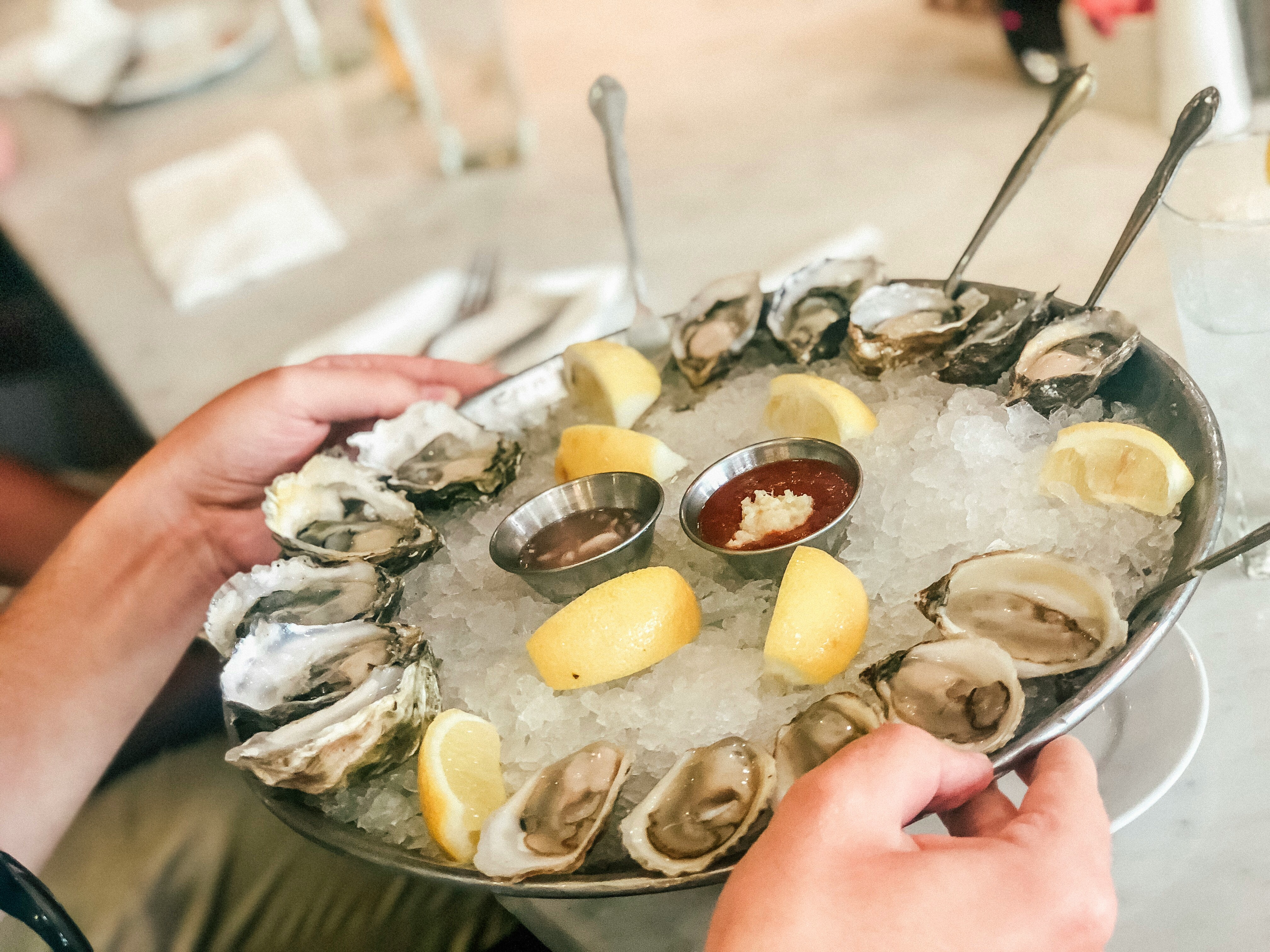
At peak right now: Oysters, Ramps. Head to a farmers market or your CSA to find them fresh.
Marylanders who grew up around the water have probably heard some version of the R-month rule from a grandparent or an old waterman at some point. Only eat oysters in months with the letter R in them. September through April, no May, June, July, August. It sounds like superstition but it has real logic behind it, and most of that logic still holds even if refrigerated trucks have changed the calculus somewhat.
The biggest reason is spawning. Chesapeake Bay oysters, mostly Crassostrea virginica, spawn in the warm months when water temperatures climb above 68 degrees or so. During that period the oysters are putting everything into reproduction and the meat gets thin, watery, and milky. If you've ever cracked one open in August and found a sort of gray, deflated creature inside, that's why. They're not sick, they're just spent. The flavor is flat and the texture is off. Before anyone was shipping oysters in refrigerated containers or farming them in cages with controlled conditions, eating a summer oyster was also a real gamble on food safety. Warm water accelerates bacterial growth, Vibrio in particular, and without cold storage between the water and your plate, the margin for error was narrow. People got sick. The rule spread.
Right now, through January and February and into March, is when the bay's wild oysters are at their best. Water temperatures in the Chesapeake have dropped into the 30s and low 40s, and the oysters have spent the fall rebuilding glycogen stores after spawning. That glycogen is what gives a cold-weather oyster its sweetness. A Harris Creek or a Choptank River oyster pulled up this time of year is fat and firm, and depending on the salinity of where it grew, you might get something clean and briny up front with a mineral finish, or something a little sweeter and rounder from the fresher upper bay waters. There are aquaculture operations all along the Eastern Shore now growing oysters in cages off the bottom, and some of them sell direct or through farmers markets in Easton, Cambridge, and Annapolis. It's a different product than a wild-caught dredge oyster in some ways, more consistent in shape, but the cold water quality is the same this time of year.
The R-month rule has bent a little with farmed oysters. Some aquaculture operations breed triploid oysters that don't spawn and therefore stay in good eating condition year-round, and their sanitation controls are tight enough that the old food safety fears don't apply the same way. You'll find oyster bars in Baltimore serving them in July now without much concern. But if you're buying wild-caught from a waterman working the Tangier Sound or the Little Choptank, the old rule still tells you something true about what you're going to find inside the shell. And for the next few months, what you'll find is about as good as it gets.
A few producers worth knowing about this week.
The 2023 Historic City Farmers Market has a new date and location! This year’s market will be held from May – October every Third Thursday from 3pm – 6pm in the Hub City Brewery parking lot at 25 W. C
In Howard County, this family farm provides chemical-free vegetables, herbs, and a cut-your-own flower garden, reopening July 1, 2026.
Located in Waldorf, this farm offers farm-raised meats, seasonal fruits and vegetables, honey, and a wedding venue.
Located in St. Mary's County, this certified-organic farm offers a variety of seasonal vegetables and small fruits year-round, focusing on fresh and healthy food for the community.
Located in Prince George's County, this provider specializes in small-batch salamis, cured meats, and sausages made from high-quality, locally sourced meats.
This seafood market in Parkville features fresh fish, a raw bar, and live crabs, emphasizing quality and traditional Maryland seafood practices.
Farm Market with greenhouse, bakery, ice cream, complete selection of fruits, vegetables, jams and jellies, country meats, eggs, candy, straw and firewood. Miller Farms farms over 200 acres of crops w
All natural, hormone free, pastured, 4-6lb roasting chickens. Raised humanely in small flocks and processed at a USDA facility.
Far Eastern Shore Winery is a family-owned, boutique micro-winery located on the eastern shore of Maryland, in the historic town of Easton.
Located on the fertile farmlands of Southern Maryland, Fridays Creek Winery is following in the rich agricultural history of Calvert County. A stately old barn where tobacco once hung now houses barre
Know a farm, market, or maker we're missing?
Submit a Listing