At peak right now: Oysters, Sweet Potato, Kale & Greens. Head to a farmers market or your CSA to find them fresh.
A chicken at a large grocery chain often costs less per pound than a cup of coffee. That gap doesn't come from nowhere, and it's worth understanding what's actually holding that price down before drawing any conclusions about it.
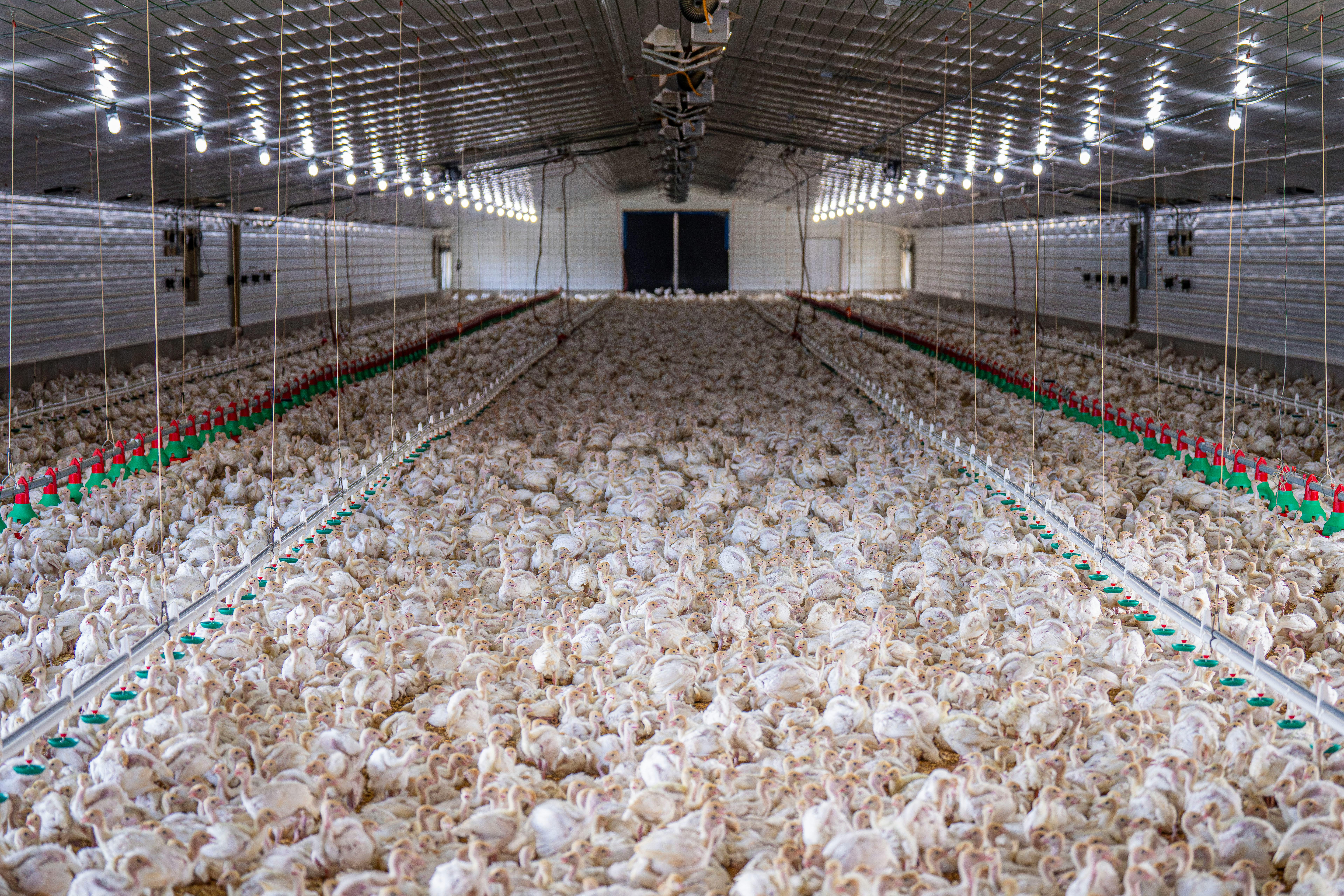
The federal commodity program is one place to start. Corn, soybeans, and wheat receive billions in annual support through price protections, crop insurance subsidies, and conservation payments that reduce the financial risk of growing them at scale. That cheap corn becomes cheap feed, which flows into broiler houses, feedlots, and hog confinement operations across the country. The scale of those operations matters too. A facility processing hundreds of thousands of birds a week can spread equipment costs, labor costs, and transportation costs across a volume that a regional processor cannot match. Per unit, the math keeps tilting toward the industrial side.
Selective breeding over the past several decades has also shaped what shows up in those cases. Broiler chickens today reach market weight in roughly six weeks, about half the time it took in the 1950s. That speed is an economic asset. Field corn varieties have been bred for yield, disease resistance, and drying characteristics rather than any quality relevant to eating. Tomatoes grown for grocery chains are bred to ripen uniformly after ethylene gas treatment, to stack without bruising, and to survive a refrigerated truck from California or Florida or Mexico. Flavor and nutrient density were secondary considerations in that breeding work, and in many cases they declined as other traits were selected for.
The supply chain itself carries costs that get routed somewhere other than the retail price. Confinement animal agriculture produces concentrations of waste that would not be economical to manage if the full remediation cost landed on the producer. Slaughterhouse and processing work has injury rates well above the national average for manufacturing, and wages in many of those facilities have remained low relative to the physical demands of the job. Those are real costs, but they appear in public health budgets, in worker compensation systems, or simply in the lives of the people doing the work, rather than in the number on the shelf tag. Environmental costs work similarly. Nitrogen runoff from fertilized commodity fields contributes to the Chesapeake Bay's hypoxic zones, and that damage gets addressed, to whatever extent it gets addressed, through public programs rather than through the price of a box of cornflakes.
None of this means that people who buy industrial food are doing something careless. For most households, price is not an abstract consideration. But the sticker price is a partial accounting, not a complete one. The difference between what something costs at the register and what it costs to produce, in full, doesn't disappear. It moves somewhere else in the system, and understanding where it goes is a reasonable place to start if you're curious about why local food is priced the way it is.
A few producers worth knowing about this week.
Terry Sterling's orchard in Somerset County brings a solid lineup of Eastern Shore apples to both the farm stand and the farmers market , Red Delicious, Golden Delicious, Cortland, Empire, Stayman, Winesap, and Grimes. You can stop by the stand on Johnson Creek Road Wednesday through Friday, or catch them at the Saturday market. If you're after Stayman or Winesap, two varieties that have largely disappeared from grocery shelves, this is a reliable place to find them.
Rocklands Farm Winery in Poolesville raises grass-fed beef, pastured poultry, pigs, lamb, free-range eggs, and organic produce on its historic Montgomery County property. Their Saturday farm market lets you buy directly from the farmers who raised your food, and the setting along Montevideo Road makes the trip worthwhile on its own. CSA shares and on-farm wine round out what this multi-faceted operation has to offer.
Visit website →Features community gardens in Anne Arundel County, promoting outdoor activities and birdwatching through various clubs and events.
Breezy Willow Farm in Howard County runs a certified organic CSA program with both summer and fall seasons, making it one of the few local options for extending your share into autumn. Members can choose between pick-up and home delivery, adding flexibility to the commitment. The farm grows vegetables and herbs alongside cut flowers, so your share has the potential to brighten a kitchen table as well as stock it.
Visit website →Nick's Fish House sits on the Baltimore Peninsula at the edge of the water, where steamed crabs and crab cakes anchor a menu that also covers deck fries, regional specialties, and cold drinks during happy hour. The waterfront deck draws crowds for craft beers and orange crushes alongside live music, making it a full afternoon or evening rather than just a meal. If you're looking for a spot to eat blue crabs with your feet practically over the water in Baltimore City, this is a reliable address.
Captain Vince Meyer and his family have been running Vince's Crab House out of Middle River with a focus on premium jumbo lump crab cakes and steamed crabs sold by the bushel. Their online shop ships crab cakes in packs of four and offers female crabs by the bushel, making it a practical option when you need quality Chesapeake seafood delivered for a large gathering. For Baltimore County residents who want the crab house experience without the drive, it's a straightforward source for the real thing.
Tucked into the Howard County countryside off Riggs Meadow Drive in Cooksville, Penn Oaks Winery is a family-run farm vineyard where the grapes are grown and the wine is made on the same land you're standing on when you visit. Weekend tastings run Saturday and Sunday from noon to 6 p.m., with porch seating that looks out over the vines. Their commitment to sustainable vineyard practices runs through everything from how they tend the fruit to how they pour it.
Know a farm, market, or maker we're missing?
Submit a Listing