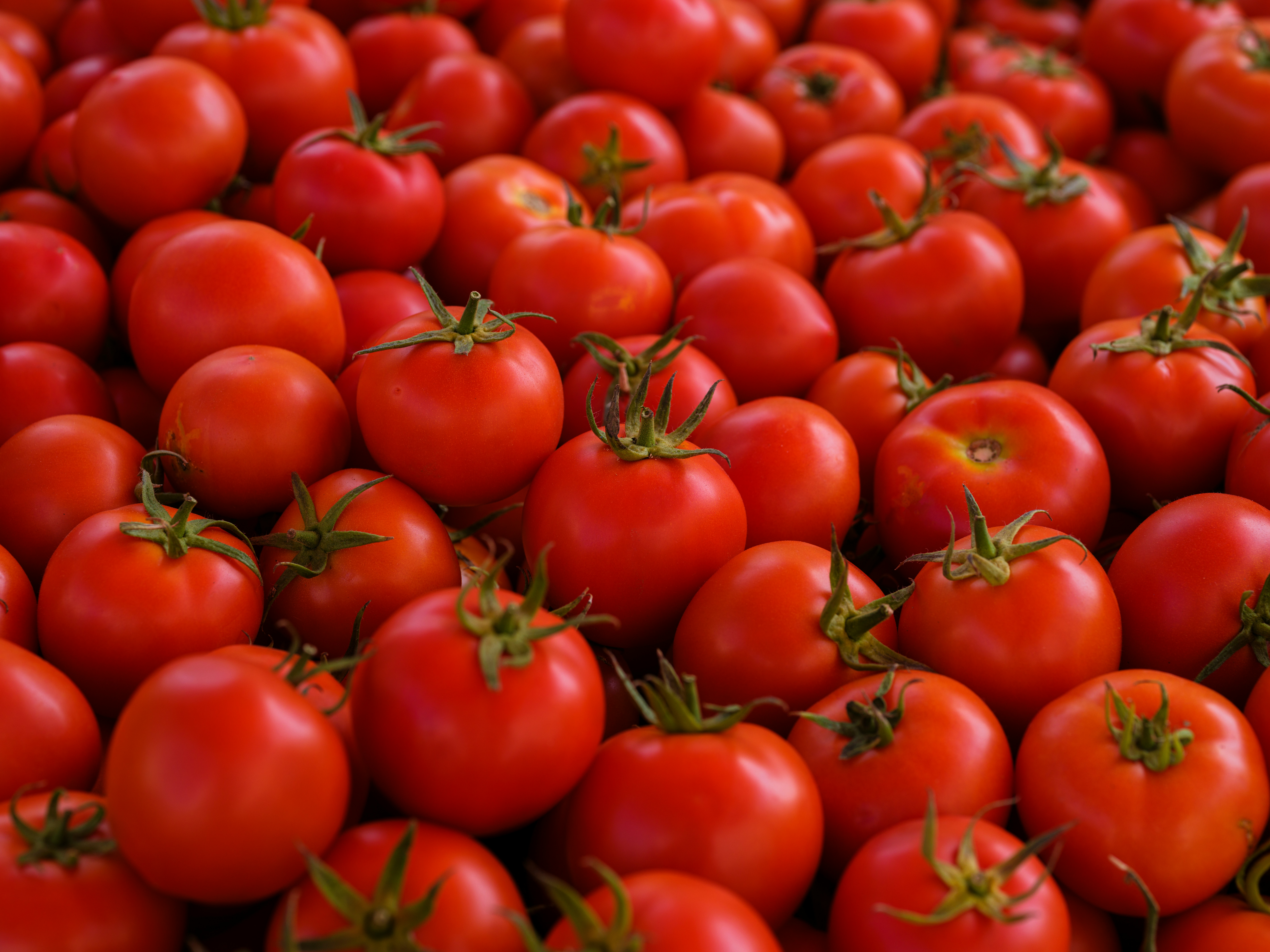
At peak right now: Tomatoes, Sweet Corn, Blueberries, Peaches, Blue Crab. Head to a farmers market or your CSA to find them fresh.
August is the month when the farmers market table changes. The tomatoes arrive in crates and flats, stacked in colors that have nothing to do with the uniform red sphere you find under plastic wrap at the grocery store. Cherokee Purple comes in nearly bruised-looking, a deep brownish-burgundy with green shoulders, the flesh inside streaked with dark juice. Brandywine is big and irregular, sometimes cracked at the stem end from a heavy rain, the skin so thin you can dent it with a thumb. Sun Gold cherry tomatoes pile up in pint containers, intensely orange, sweet past the point where you'd believe it if you hadn't eaten one. German Johnson runs pink and enormous. Green Zebra stays green even when it's ripe, striped pale and darker green, tart in a way that cuts through fat beautifully. Every farm decided something different when they ordered seed in February, and the result in August is a table you want to stand at for a while.
Grocery tomatoes are bred for a supply chain, not a kitchen. The skin has to hold up to mechanical picking, packing, refrigeration, and several hundred miles in a truck. Color has to be uniform so produce buyers and shoppers recognize them as ripe. The variety has to set fruit reliably and resist cracking in the field. Flavor is not on that list of requirements, and it shows. A tomato picked green and gassed with ethylene to turn red will have the color and the firmness and none of the sugar that develops when a fruit ripens under actual sunlight on the actual vine. What you buy at a good Maryland farm stand in August was picked that morning or the day before, warm from the field, still carrying some of the smell of the plant.
When you have too many, the easiest thing is a salad that is barely a recipe: thick slices of whatever varieties you bought, some flaky salt, a pour of olive oil, maybe torn basil if you have it. That's a full lunch. If you have a real surplus, roasting is the best way to handle the overflow. Cut them in half, put them cut side up on a sheet pan with olive oil and salt, and run the oven at 325 degrees for two hours or longer until they're collapsed and concentrated and the edges have started to caramelize. What comes out freezes well and tastes like August in January on top of pasta or stirred into a pot of white beans. Some people make sauce. Some people do nothing that organized and just stand at the kitchen sink with a Cherokee Purple and a salt shaker and eat it like an apple, juice running down to the elbow, which is also correct.
The season in Maryland runs from late July into September, but August is when you want to be paying attention at every market and farm stand you can reach.
A few producers worth knowing about this week.
Deep Run Farm has been working 235 acres in Hampstead since 1975, which means the Horner family has had decades to figure out what grows well in Carroll County. Their roadside stand on St. Paul Rd is open early summer through October, nine to seven daily, with fresh-cut flower bouquets alongside the produce. If you want a more structured commitment, their weekly CSA box is a solid way to stay stocked through the season.
The Saturday Rockville Farmers Market, held at Route 28 and Monroe Street from May through November, shifts character week to week as the season moves from spring greens to summer stone fruit to fall harvests. Vendors are held to local sourcing standards serious enough that this past season, the market issued a specific, time-limited exemption for peaches and nectarines following April freeze damage , and required all supplemental fruit to be clearly labeled. That kind of transparency is not common, and it reflects well on how the market is run.
Blades Orchard in Federalsburg runs a CSA program built around an impressive range of tree and bush fruit, including peaches, nectarines, plums, pears, apples, blueberries, blackberries, and strawberries, with pumpkins rounding out the fall season. The on-farm market is open by appointment, so plan ahead if you want to visit Preston Road directly. You can also find them vending at Camden Avenue and FRESHFARM Annapolis markets.
Faithful Friends Farm has been running on Old Hanover Road in Westminster since 2012, offering pastured products alongside a seasonal farm share you can sign up for in three- or six-month increments. What sets this Carroll County operation apart is its emphasis on bringing families onto the farm itself, with hands-on workshops covering yogurt making, pizza parties, and more. If you want your CSA membership to come with some actual time on the land, this one delivers.
OREBANKS raises grass-fed beef in Sparks, in the rural northern stretches of Baltimore County, keeping their cattle on pasture through the growing season and transitioning to farm-grown hay in winter. The operation avoids corn, antibiotics, and hormones entirely, with no additives of any kind. For buyers looking for straightforward, traceable beef from a single farm without a long supply chain, this is a solid local option.
Conrad's Crabs & Seafood Market on East Joppa Road in Parkville has been a Baltimore County go-to for live and steamed crabs, fresh fish, and a full raw bar. The market sources crabs directly and keeps extended hours through the weekend, making it a practical stop whether you're planning a backyard crab feast or picking up something fresh for a weeknight dinner. Catering is available for larger gatherings.
Kent Fort Farm in Stevensville on the Eastern Shore opens its fields for U-Pick peaches, blackberries, pumpkins, and vegetables across the growing season. Their Peach Festival on the first Saturday in August draws crowds looking to pick at peak ripeness and celebrate one of the Shore's signature summer fruits. If you're planning a trip, call ahead to confirm what's ready in the fields.
Know a farm, market, or maker we're missing?
Submit a Listing