At peak right now: Tomatoes, Sweet Corn, Blueberries, Peaches, Blue Crab. Head to a farmers market or your CSA to find them fresh.
Egg cartons have gotten crowded with language. Cage-free, free-range, pasture-raised, certified humane, American Humane certified, and a handful of others all appear on shells that look more or less identical once you crack them. Some of those terms have regulatory teeth and some do not, and sorting out which is which matters if you're spending extra money on the assumption that a chicken spent her days outside.
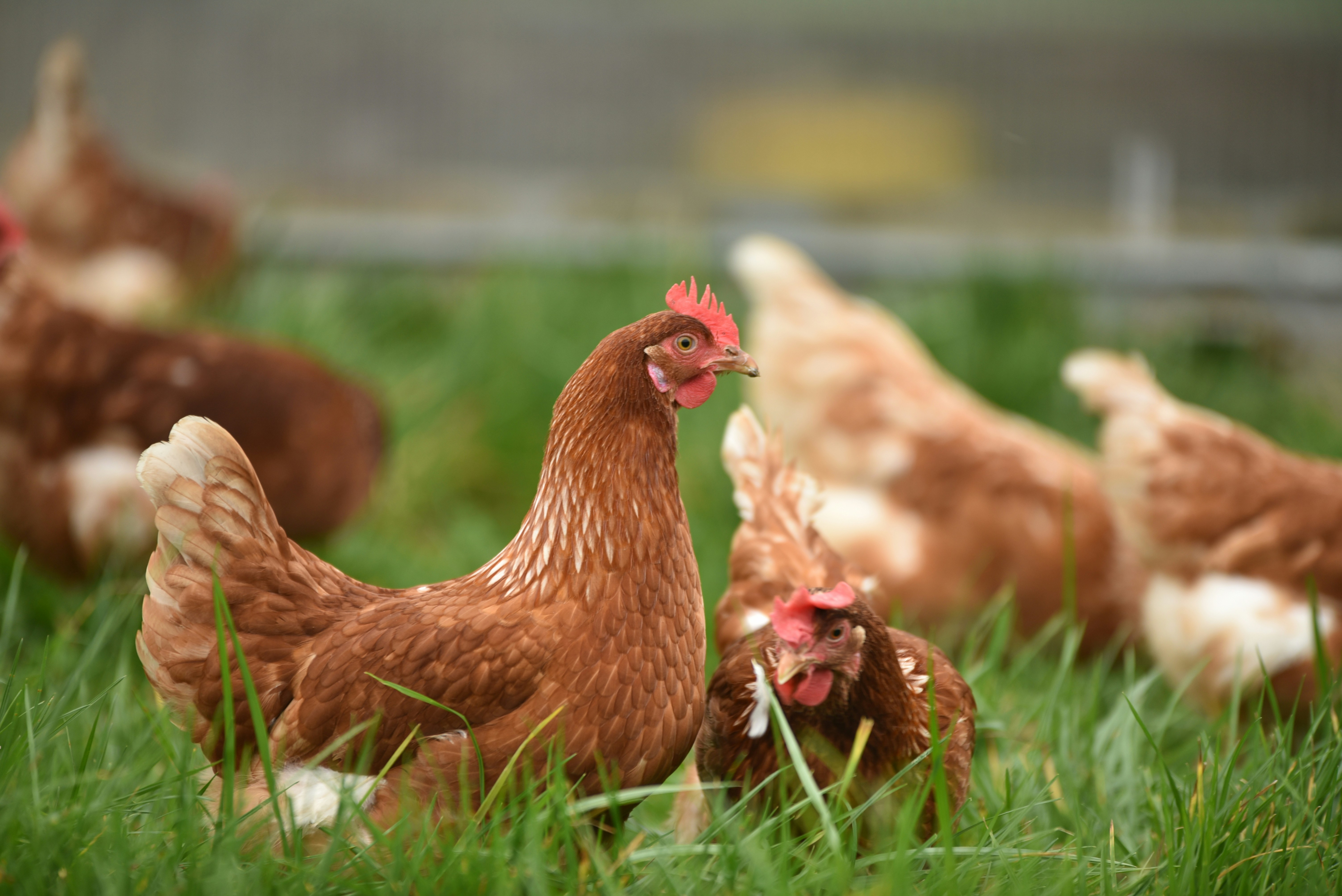
Cage-free means the birds are not in battery cages, which is real but limited. They're still indoors, typically in large barns, and density can be high. Free-range requires that outdoor access be provided, but the USDA standard doesn't specify how much space, how long per day, or whether the access point is more than a small door in a barn holding tens of thousands of birds. A flock can meet the free-range standard without most birds ever finding their way outside. Pasture-raised is the term that describes what most people are picturing when they buy the premium carton: hens actually living on grass, rotating through pasture, eating bugs and clover alongside their feed. The Certified Humane and American Humane Certified programs do have specific outdoor space requirements for pasture-raised labeled products, but pasture-raised on its own is not regulated by the USDA. Any farm can print it on a carton without meeting a defined standard.
The same logic applies to beef, pork, and chicken labeled pasture-raised at a grocery store. Grass-fed beef has a USDA marketing claim standard requiring that cattle ate grass and forage rather than grain, but it's been inconsistently enforced and doesn't address how much time the animals spent outdoors. Pasture-raised on a package of ground beef or a package of chicken thighs carries no federal definition at all. That's not an argument for cynicism so much as an argument for knowing your source. A farm like Loch Lynn Heights-area producers in Garrett County, or the diversified operations you'll find through the Buy Local Challenge farms in the central Maryland piedmont, are places where you can ask the farmer directly how many acres they're running per bird, what time of year the pigs go out, whether the cattle stay on pasture through the fall. Most farmers doing this work want to talk about it.
A CSA membership or a regular farmers market relationship is the most reliable way to verify what you're buying. When you've been out to see the setup, or when you've watched someone unload their cooler at the Waverly market every Saturday and field questions from the same customers for five years, the carton language stops mattering much. You know what you're getting because you've seen where it comes from. That's a harder thing to scale than a certification, but it's the version of transparency that actually holds up.
A few producers worth knowing about this week.
Established in 1973, Larriland Farm has been a Howard County institution for three generations of the Moore family, offering pick-your-own harvests on 285 acres in Woodbine. The season runs late May through early November, opening with strawberries and rolling through peaches, apples, and more than 20 crops in total. The farm market in the Red Barn stays open year-round, and field tickets are now required for PYO access, so check the website before you head out.
Open Barn Farm in Woodbine raises grass-fed beef and pasture-raised pork using regenerative practices, and also produces tallow and lard products for the home. Rather than a traditional farm stand, they operate a drop-location model, with pickup points available across Maryland, Virginia, and D.C. on a weekly or biweekly schedule. If you're in Howard County and looking for a consistent source of pasture-raised meat without committing to a full CSA box, their flexible ordering system is worth a look.
Mountains to Bay CSA has been connecting Calvert County families with certified organic produce since 1997, when it was founded by the Maryland Certified Organic Growers Co-operative. Members receive 20 weeks of vegetables and fruit starting in mid-May, with pickup options in Sunderland and the Annapolis/Crownsville area. Two farm tours each season give subscribers a closer look at where their food is grown.
HoneySmith Bees & Gardens in Crownsville is one of those places that keeps revealing itself the longer you look around. The working apiary out back supplies raw honey sold in the Honeysmith Market, alongside hand-poured beeswax candles, Body Velvet, and hydroponic produce. They also carry pollinator-friendly perennials, annuals, and native plants, making it a useful stop whether you came for a flat of flowers or left with a jar of honey you hadn't planned on buying.
Visit website →Chuck's Butcher Shop in Bryans Road has been a Charles County institution since 1974, when it began processing beef, deer, and pigs for local farmers before expanding into retail. Today the shop carries everything from bundled cuts to BBQ pigs and deer processing, drawing on more than 50 years of hands-on meat knowledge. Stop in Tuesday through Friday to ask questions and place custom requests.
Old Line Custom Meat Company in Baltimore City is a partnership between Ed Burchell of Roseda Farm and Bill Ruppersberger of Geo. G. Ruppersberger & Sons, formed in 2010 to bring serious processing capacity to Maryland's local meat supply. Roseda's side of the operation centers on Black Angus cattle raised on pasture in Monkton, finished and dry-aged the old-fashioned way. If you've seen Roseda beef on a restaurant menu or at a local grocer, this is the infrastructure behind it.
Know a farm, market, or maker we're missing?
Submit a Listing